
Contents4
Sufficient consensus
Search intent classifies a query as informational, navigational, transactional, commercial or local. Content is matched to that class, and the format follows from it.
The classification is useful and it is where most briefs stop.
What the result pages leave out
These belong to the subject. People ask about them. They are missing from the agreed coverage.
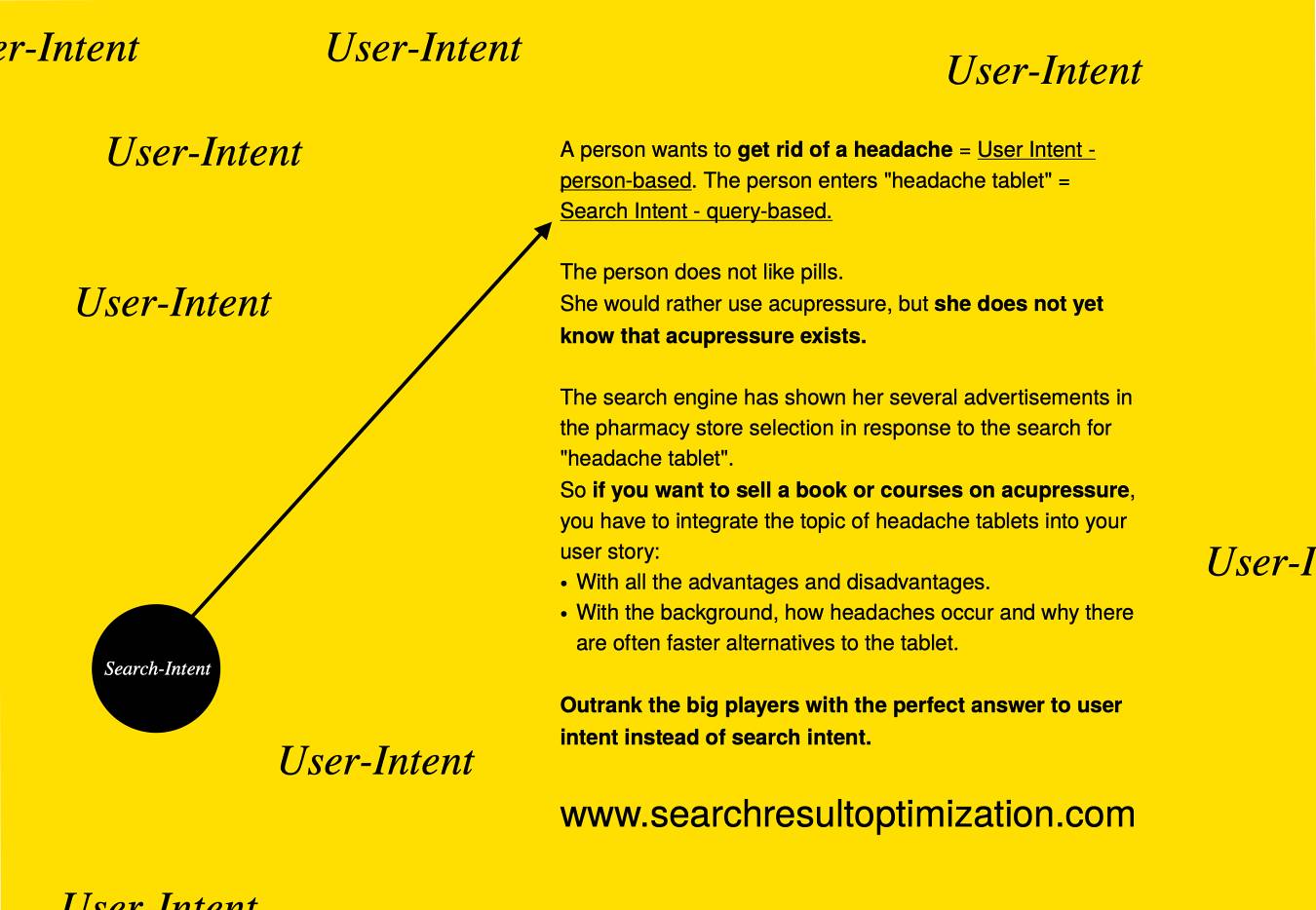
- The intent behind the intent. The query is the form the need took on the way to the keyboard. It is a fraction of the need.
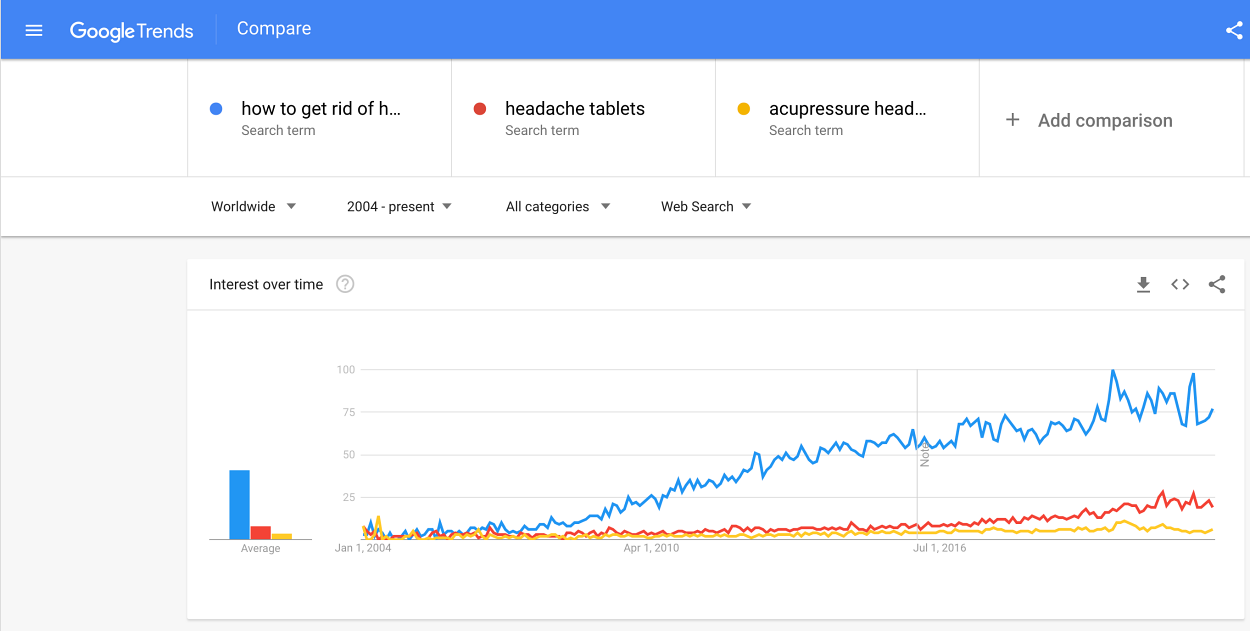
- Solutions the searcher does not know exist. Someone who has only ever heard of one option searches for that option and finds ten versions of it. Nothing new enters their world.
- Intent that changes during the search. People reformulate because they learned something. Almost no content plan accounts for the second query.
- The wider user intent. Diving is the search intent. Recreation is the user intent. A result built only for the first one is complete and useless.
- Intent conflict. A buyer and a researcher can type the same words. Serving the average of both serves neither.
What people actually want to know
- What does this person want to be able to do after reading?
- Which alternative would they choose if they knew it existed?
- What is the second question they will type after mine?
- Where does this search sit in their week, and what happens if it fails?
Search intent and user intent differ in many cases. The gap between them is where the results that surprise people are built.